Termites in Owensboro
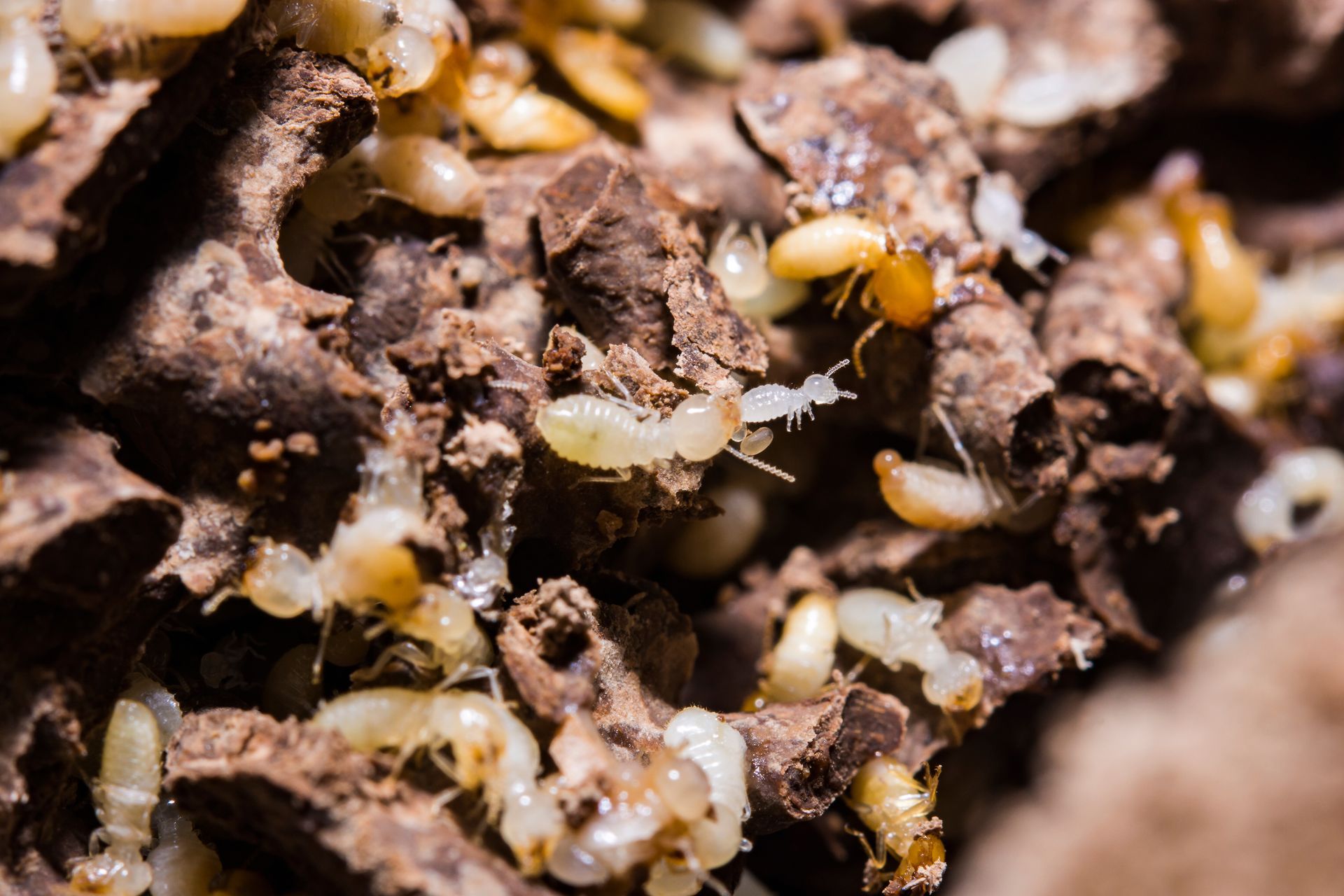
Many people in the Midwest believe that there is only one type of termite in the Owensboro area. Why this is largely true we have encountered a couple of different species in the last couple of years. The most common type of termite found in the Owensboro area is the subterranean termite. Try to imagine a bee colony in the ground without the stingers. A regular termite colony is very similar in make up to a bee colony with the same type of soldiers, workers and reproductive castes. Subterranean termites in Owensboro live in colonies in the ground and rotate year-round from the soil to areas that provide the cellulose that the colony needs for its survival. Unlike bees who go dormant in the winter and feed on their stockpiled honey to survive the Owensboro winter termites continue to feed by building shelter tubes made from mud, water and fecal deposits. The termites use these tubes in all seasons as their body has a very high moisture content leaving them susceptible to dehydration and attack from predators without it. A termite workers job is to forage for food and make sure the queen is healthy and her young are taken care of. Soldiers are in place to defend them from their number one predator in Owensboro, the ant. Your local pest control provider, Pass Pest, has experience in dealing with subterranean infestations in a variety of ways. Termites can be difficult to control that is why it is important to use a locally owned provider like Pass Pest control to combat all types of termites in Owensboro. There are many ways to control termites. The first and most common method is with liquid termiticides. During the 80’s and early 90’s it was very difficult to receive effective liquid termite infestation solutions in the Owensboro area. Shortly after the banning of chlordane in 1986 the pest control industry faced a future of attempting to control termites with liquid barrier termiticides. The design was supposed to deter termites from entering structures by laying down a continuous barrier beneath the structure to deter termites from attempting to enter. These barrier termiticides had many drawbacks in conjunction with the fact that they did not work very well. One drawback was the odor. Some applications solvents were so strong that many times a customer would have to leave the home after an application was completed. Another drawback was the enormous amount of drilling required by the label to perform termite control for our Owensboro customers. Every void, hollow block and brick veneer had to be drilled and injected with a labeled termiticide making application tedious, lengthy and possibly dangerous to the applicator due to wrist injuries from the drill locking up. Consequently, more effective types of termiticides that worked differently than barrier products came on the market. These applications were typically very low odor without all the intrusive drilling that came with barrier termiticides. The “new generation” products did not contain odorous solvents and the termites in the Owensboro area did not sense its presence in the soil as they foraged for food. Termites continue to forage unfazed by the termiticide for a period. The workers interact with each other often brushing up against others as they travel through the colony and shelter tubes. They also share food with each other through a process called trophallaxis. Worker forage for cellulose to feed the queen and other members of the colony. So, once the worker encounters another affected member it can transfer the control through contact or through the process of sharing digested food. Also, termites can be cannibalistic. Many times, workers will consume sick or dead termites thus continuously spreading the product to the rest of the colony resulted in total colony collapse. Unfortunately for the pest control operators in Owensboro the applications may not be structure specific and can kill colonies not feeding on the home and some that may be feeding on a neighbor’s home.
Another popular control method is using termiticide baits. Baits work very similarly as liquid termite applications. However, the active ingredient is delivered in a different way. Typically, baits are introduced into the soil harbored in plastic container which contains the active ingredient. Much like a “new generation” treatment the colony can be eliminated as the workers feed on the bait matrix and share it with the other members of the colony leading to its reduction or collapse. The advantages of baits in Owensboro are that it can be installed very quickly, usually taking less than an hour to install on a standard structure. It also can be used in sensitive area that prevent liquid applications and be used in situations where liquid termiticides can leach into waterways due to their proximity to water. However, baits come with some major disadvantages not seen with liquid applications in Owensboro. Firstly, termites constantly and randomly forage regardless of an existing food site. In theory, termites discovering these stations to being the feeding process should happen relatively quickly. While I have witnessed this happen as quickly as expected I have personally experienced situations when the bait stations remained untouched for up to three years. The bottom line is if there is no feeding there is no control and termites can continue to damage the home. Secondly, once the renewal is not paid or the system is removed there is no residual protection for the homeowner.
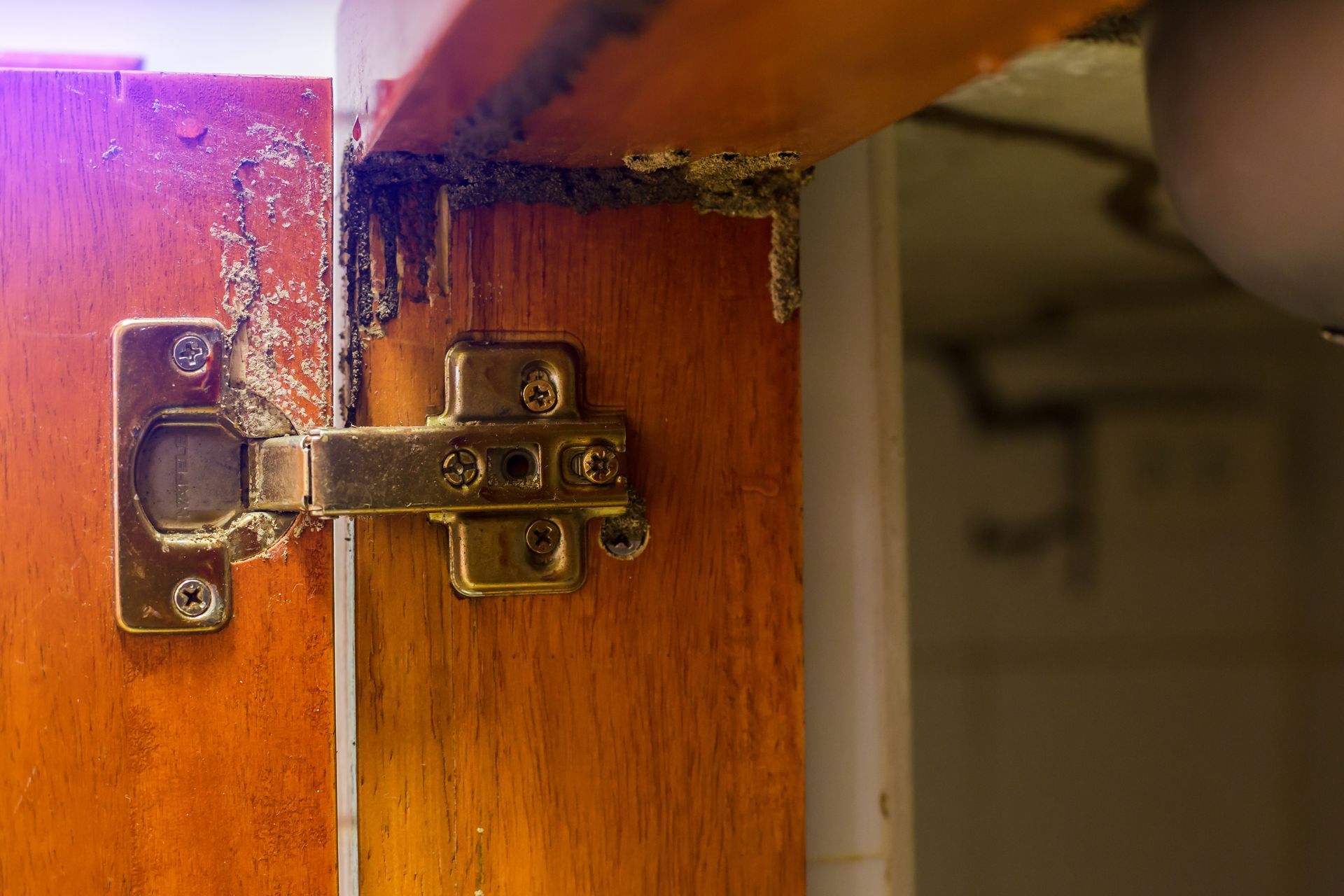
The last method of control which is not used often in the Owensboro area is fumigation. This brings up the scenarios I alluded to earlier. Last year we were contacted by a towboat company complaining of “dirt” coming out of small holes in the paneling of the living area. The company had received three new towboats that were constructed in Louisianna. Apparently during the building process drywood termites infested all three boats. Drywood termites operate above ground. Swarmers are 3/8 of an inch long and a common telltale sign of a drywood infestation is the release of their wings after mating which can be quite numerous. I mentioned earlier in the blog that the initial call was for “dirt” coming out of the paneling. This “dirt” was what we refer to in the industry as “frass”. Frass is fecal pellets that are expelled from the galleries by the worker termites. Drywood fecal pellets are hard, dry and about 1 mm is length. The fecal pellets possess six concave indentations and rounded ends. Color of the frass is usually dark, but it depends on the wood they are feeding on. Control was attained in both situations by tenting the towboats and introducing fumigants into the entire structure. Pass Pest fumigated one boat in Owensboro and another in Paducah. Subterranean termites cannot be controlled with a fumigant. While some members may be eliminated the key components are harbored deep in the soil away from the fumigant’s harmful effects.
Another species that are not likely to appear in the tri-state area is the Formosan termite. Several years ago, while I was running an operation in Birmingham, I found the first reported colony of Formosans with another colony found shortly afterwards in Memphis. Their initial existence was obvious due to the fact many homes in one neighborhood were experiencing massive amounts of termite damage not normally seen with regular subterranean colonies. Regular subterranean termites look very similar to Formosan termites, but their numbers are much larger, and soldier activity tends to be much more aggressive when disturbed. Unless climate changes continues to allow them to migrate farther north we are not likely to experience them in the Owensboro area.