What are the signs that Raccoon’s are in your home, what to do about it, and what do they like to nest in and why…?
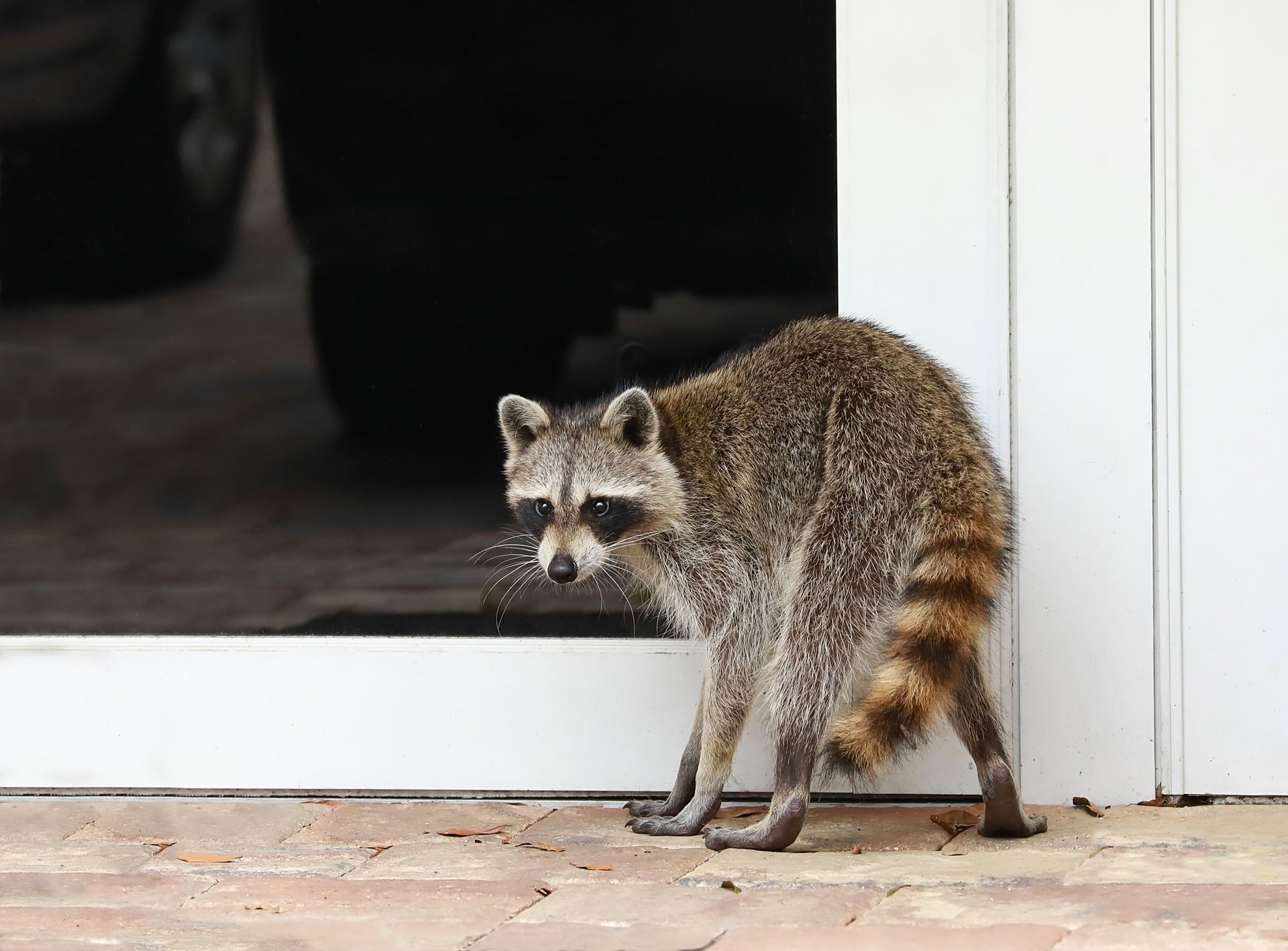
Many homeowners here in Midwest specifically often ask what attracts these critters to my humble abode, and how in the world do they get in? Just understand there are telltale signs of activity and simple effective ways to protect your home from them. So let’s start with the basics to understand a raccoon and its methods, as they are attuned to survival and taking care of their young at all costs. The main reason they find themselves in our attics and crawlspaces, boils down to a couple key elements. First, they will always look for shelter of any kind as it is much more suitable for nesting and everyday life, and much safer than outside. Second, they acclimate well to the microclimates our homes and spaces create, they like a warm safe cozy bed, just as much as you do. That is the very reason it is so hard to evict them once inside, it is built into their survival instincts.
Raccoons find shelter fairly easily, during the late fall and early winter months you may kick up the heat just a little, which in turn makes our wall voids and attic spaces much warmer than the outdoor temps. Believe or not they can detect the escaping heat from rooflines, gable vents, and soffit areas during their hunt for shelter fairly quickly. Once they find or have made way inside, they will use fabric, insulation, and boxes to provide comfortable bedding. Raccoons will often try to get close to ductwork or chimneys as it can be a good source of heat, so that is a great place to look or inspect if you think you heard some footsteps above you in the attic or even down below in the crawlspace in some cases. Protection is also high on their radar, as things like coyotes, owls, and harsh cold weather will all pose a dangerous threat when compared to our spaces they can sleep in safely.
What are the most common entry points for a raccoon and what can you do to “raccoon proof your home”…?
So let’s gets right into it, where do they go and how do they get in? Obviously the most common area is your roof or soffit, and this leads right into your attic. Make sure to inspect or have a professional check these spots at least once a year or at the first sign of trouble you hear or find on your own.
Soffits, eaves, fascia, and roof edges: They will use your overhanging trees and or downspouts/gutters to access the roof in many cases. Once they have done that they can easily pull or peel any loose soffit, damaged roof shingles, or rotten fascia boards.
Chimneys: This one is pretty simple, but common, open chimney caps that are missing the metal or wire cap, allow the raccoon easy access to the space. The textured spaces on the brick allow them to climb down to access your fireplace and potentially your home.
Gable vents: In general most of these vents are made from plastic or thin screens, and in turn do not offer much resistance to the raccoon. They can tear through these within a few seconds and gain access to the attic.
Decks and crawlspaces: Even though you often think of raccoons in terms of going up, they also enter at ground level or below. They will target sheds, porches, modular home skirting, and open crawlspaces.
There are options for all of these scenarios, they can all usually be repaired and resealed with solid exclusion techniques and pest proofing. Let’s consider the soffits, edges and gable vents, they can be repaired or excluded with sheet metal, metal hardware cloth, specialized screw fasteners, and even some types of pest foam or sealant. This is done in a way so that it makes it very difficult for a raccoon to pull or push the trim pieces out and enter your attic space. Chimneys follow suit, a new metal cap or wire cap can be installed to keep them from entering. It is equally important to make sure your deck lattice and modular home skirting is secured with multiple screws and not just placed or freely anchored with a couple shallow screws here and there. Another place that is often overlooked is the crawlspace door most homes have for access under the home. If this area is lose or damaged, you should know a raccoon will find and target the area.
What type of damage can you expect from a raccoon when they enter my attic or crawlspace...?
- Damage to exterior entry points, usually visible upon inspection
- Damage to ductwork, decking, insulation, vapor barriers, wiring, and exhaust vents
- Soiled insulation from droppings and urine
- Efficiency loss due to insulation movement and travel
- Bacteria and viruses carried within
- Drywall damage
The above items are just a brief list; there are often other specific types of damage associated with specific types of builds and construction. Things to keep in mind when anticipating expenses for wildlife service’s or repairs are often unexpected. They range from attic insulation removal and installation of new, partial or full replacement of ductwork, and even a full disinfection service of your home. These all may not happen at once, but time is of the essence so it is very important to try and identify problems as they happen or as early as possible.
Things you can do around your home to deter raccoons from locating and accessing your property easily…
Trash cans are a considerable attractant, so it is of utmost importance to keep them inside a storage area if possible, use sealing/twisting lids, and or bungee cords. Open lids are a “no no” and spilled food will just invite them right in. Bird feeders are often forgotten, but they also can attract raccoons, due to spillage or the feeder being an open style, it is best practice to make sure it is enclosed somewhat and on a thinner pole that deters climbing. Lastly any scraps or compost piles will often attract unwanted guests as well, ensure that these are all latched or closed in a way not easily opened, do not store these items openly in the in fall or winter months.
Trees and landscape are also very important as we touched on earlier, trees that drape the house or bushes that are easily climbable and within jumping distance should all be trimmed away and manicured. Gutters and downspouts often play a role in the raccoon entering your home, it is always best to make sure there are not rough, textured or gapped surfaces they can climb easily. Instead, try to have smooth metal collars or backing in these areas and around all wooden posts, this will greatly reduce the possibility they will climb up and gain access to your home. One last important item would be, to always make sure your gutters have been properly cleaned and maintained; leaving debris and leaves inside often will bring about moisture and leaks. Moreover, this will rot out the fascia board or soffit area, leaving it an easy target for a raccoon to tear the area open and gain access within.
What types of deterrents work temporarily on your home for raccoons…?
There is research that shows that scents sometimes repel raccoons temporarily, you can use things like rags or towels soaked in vinegar and ammonia, and place near exterior entry points. Keep in mind the colder temps can reduce the efficacy of the repellent and they can also adapt to the new odors. Light is often the bane of a raccoon’s existence as they prefer the night sky. For this reason floodlights or LED lights can alarm them enough that they will make an exit and go elsewhere. It is important to keep in mind that they are very intelligent and can eventually avoid or ignore the lights if food or shelter is of dire need.
What noises will I hear and what clues give a raccoon away…?
You are human and our ears can be our best friend in this case, listen for a heavy thump, or thud, raccoon’s walk with a heavier thump or clattering. This would be opposite a squirrel or rodent, as they would make a lighter scratching noise or light scurrying. Second, noise or vocal giveaways can be; a growl, odd purrs, or whistles. You can also hear a cry or a type of meow although the latter is not common. The crying normally is in line with the female raccoon having her young pups, and they will be tucked away either in a void or out of the way ceiling area.
What should I do if a raccoon is in my home already or I want to keep one off my property…?
Well, this is the easier part of our session on raccoons and their habits. A professional pest and wildlife company who is licensed in trapping services and pest proofing/exclusion services is typically your best option. You can expect an evaluation to educate you and your family on what areas need curatively or preventatively sealed to ensure raccoons are unlikely to enter your home. It is also important to have a competent licensed technician who will live trap the issue safely and humanely, and then relocate it far enough away so that it will not return to your property. This makes the situation a win for all involved, your home is secure and the raccoon is gone never to return, but still able to survive and flourish as nature intended.
What we do!
Our hope is we have helped with a bit more knowledge on the raccoons basic biology, how raccoons become an issue, what attracts them to your home, what areas they are looking for pertaining to entry, and what techniques are best for keeping raccoons out. Should you need to take the next step and call a professional our trained wildlife staff is licensed and ready to assist at Pass Pest in Newburgh, Indiana at anytime an issue shows up. Call us now at 812-483-1637 or email us at office@passpest.com. Your initial inspection is always complementary and free of charge. “We know what works”